
Helping Families Build Real Thinking Skills at Home
You do not need to be a teacher to help your child learn.
You do not need special training, expensive programs, or hours of preparation.
What children need most is consistent opportunities to observe carefully, think through problems, learn from mistakes, and build confidence through practice.
Structured Learning Lab was created to help families provide those opportunities through calm, screen-free activities that strengthen reasoning, focus, problem-solving, and independent thinking.
Whether you are supporting learning after school, homeschooling full-time, or simply looking for meaningful educational activities, our structured workbooks are designed to make real thinking practice accessible for every family.
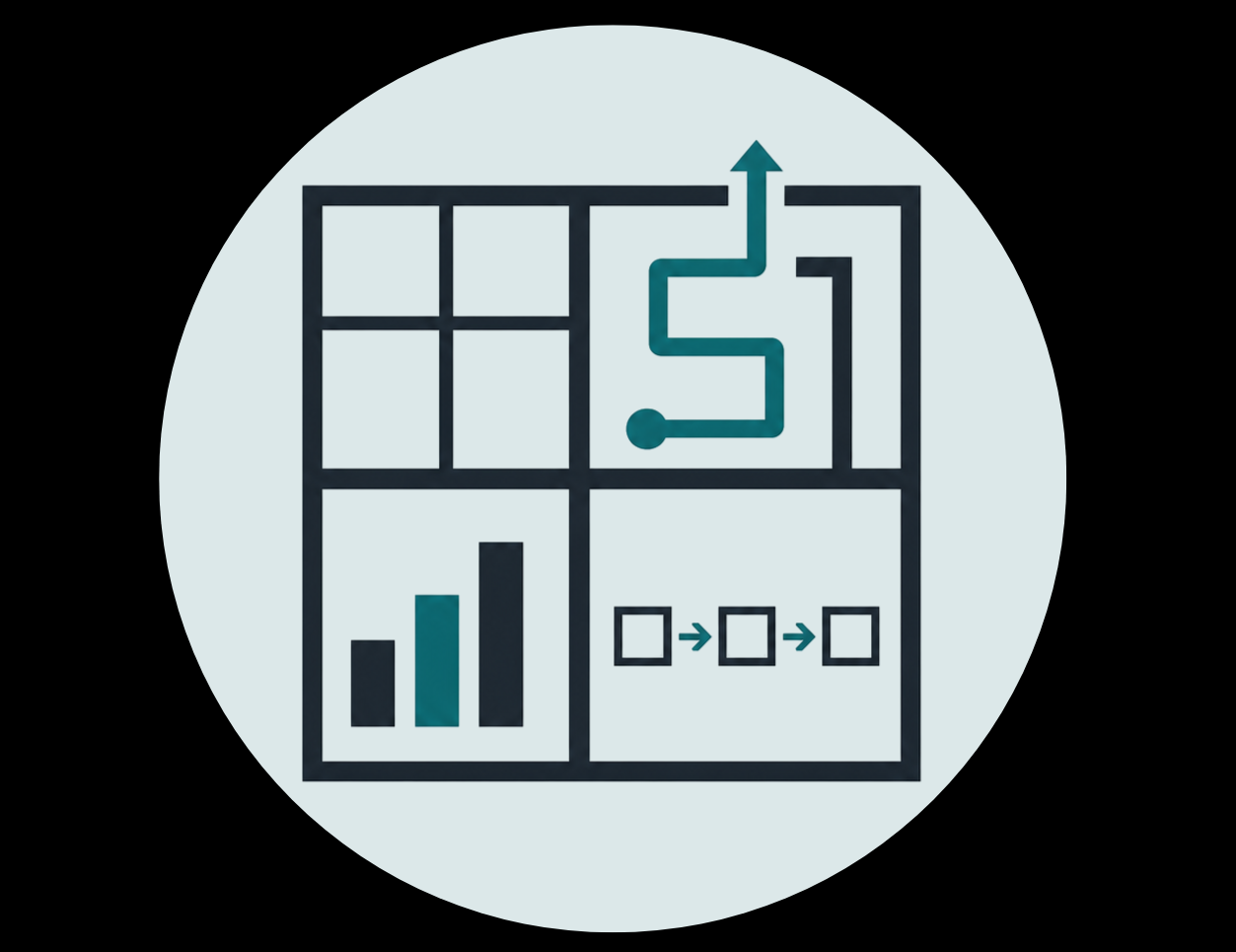
Four Structured Learning Areas
Logic
Rule-based reasoning and structured placement.
Maze
Planning, navigation, and decision-making.
Data
Comparison, inspection, and pattern recognition.
Coding
Sequence, execution, and step-by-step thinking.
Why Structured Practice Matters
Every parent wants their child to succeed.
But many families face the same challenges.
Children become frustrated when problems feel difficult.
They rush through assignments without thinking carefully.
They rely on guessing instead of reasoning.
They spend more time consuming information than learning how to analyze it.
Building strong thinking skills does not happen overnight.
Like reading, writing, or playing an instrument, problem-solving improves through practice.
Structured Learning Lab was designed to provide that practice in a clear, supportive way. Children learn how to observe, follow rules, identify mistakes, and work step by step toward a solution. Over time, these habits help build confidence, persistence, and greater independence.
Supporting Your Child with Confidence
How Structured Learning Lab Helps
Structured Learning Lab uses four activity areas to build different kinds of thinking.
Logic activities help children practice rule-based reasoning, careful placement, and step-by-step problem solving.
Maze activities help children practice planning, path selection, spatial reasoning, and decision-making.
Data activities help children practice comparison, inspection, pattern recognition, and careful observation.
Coding activities help children practice sequences, order, execution, and following directions with precision.
Each area strengthens a different part of the thinking process. Together, they help children become more careful, more confident, and more independent problem-solvers.